Elmo Library › Reverse Collapse: Code Name Bakery 逆向坍塌:面包房行动 › Classified Secret Files
Monthly Magazine Archive: Latest Zone Definitions
月刊档案 - 最新区域定义
Classified Secret Files · chapter 1 of 30 · 3 lines
Read with voices and theatre mode[Transcript of Zone Difinitions][区域定义副本]
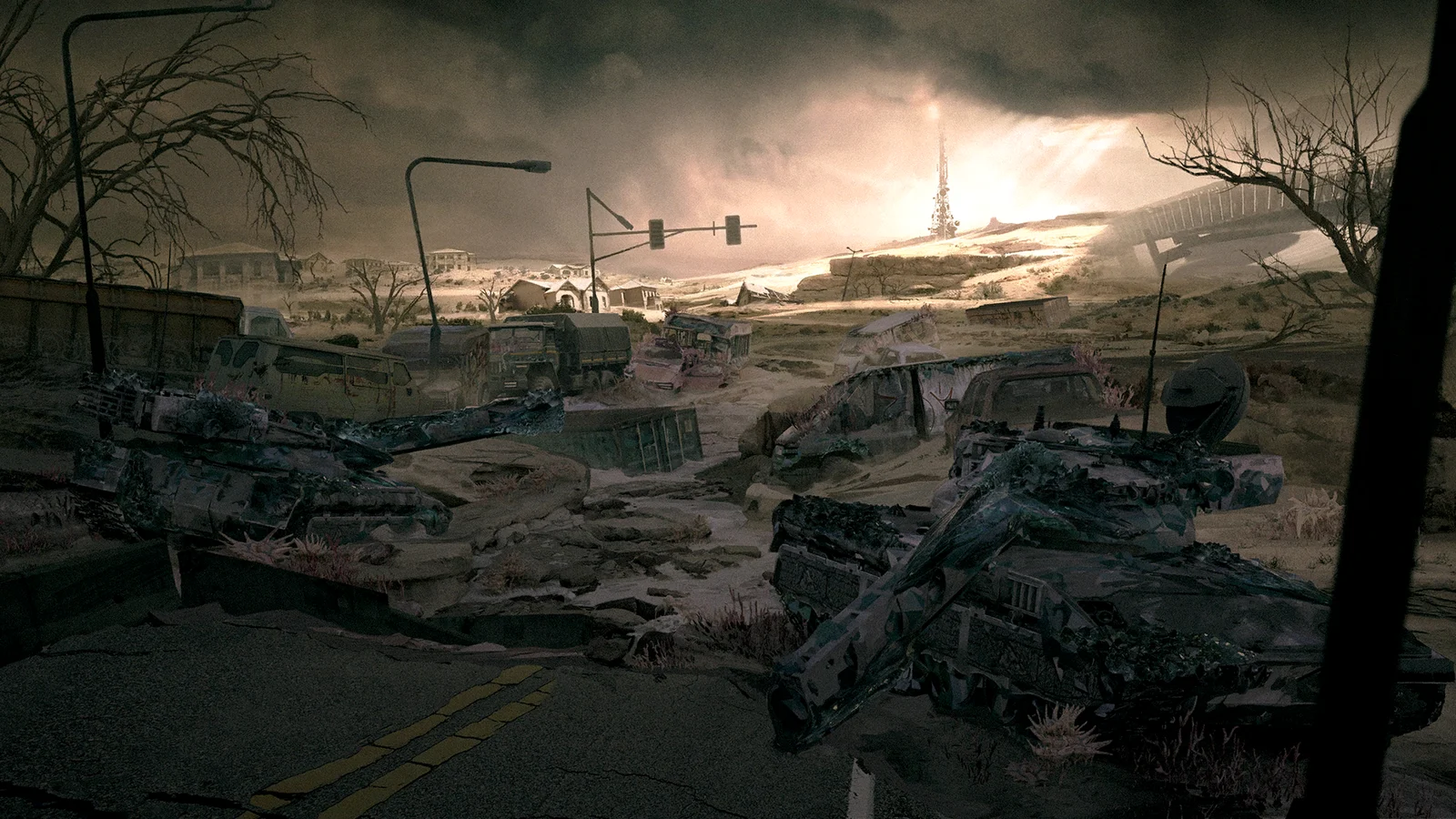
"Heavy Contamination Zones, Contamination Zones, and Safe Zones" Rossartrist Monthly, February 2089 Red Zones Red Zones are heavily contaminated areas defined by the United Nations as lethally hazardous to living organisms. The intensity of Collapse radiation in these regions is harmful to both living organisms and ordinary electronics. Special protective procedures are required for both humans and machinery before they can enter Red Zones. After the Beilan Island Incident, Red Zones have become a breeding ground for ELIDs. Collapse radiation storms have ravaged regions covered in nature, crystallizing and silicifying the flora into crystalized forests. It has also given birth to a new species of plant that is adapted to Collapse radiation—dense clumps of radioactive Epiphyllums. They periodically absorb and release Collapse radiation particles, rapidly converting passing lifeforms into ELID creatures. The surviving ELID-infected individuals have evolved different traits to adapt to their environment —there are predators that spew acidic fluids, large beasts with silicified hides, and so on. Among them, the most powerful known to men are Type D ELIDs, which must be suppressed with the use of Assault Artillery units. Red Zones are utterly uninhabitable by human beings. In fact, studies to date have not managed to find any signs of large-scale inhabitation of Red Zones by any lifeforms. Most of the human structures in the Red Zones that are still standing have been built before the Beilan Island Incident. The structures that have not been restored and reused are now in ruins due to the Collapse radiation storms and extreme climate. Given that they might collapse and crumble at any time, it is safe to say that any value there may have been in recovering them have been lost. The frequent Collapse storms in the Red Zones have removed surface water bodies, topsoil, and the water tables there, turning them into deserts. Certain areas which were rich in organic matter have been silicified by the Collapse radiation and appear as masses of black rock. Yellow Zones Strictly speaking, Yellow Zones should be referred to as "contamination zones". After 2030, the United Nations used low-orbit detection satellites to map the intensity of Collapse radiation on the Earth's surface. Such areas are classified as contamination-free zones, contamination zones and heavy contamination zones. They are also more commonly known as Green Zones, Yellow Zones, and Red Zones. After the Beilan Island Incident, contamination zones were considered unsuitable for human habitation. However, human attitudes towards contamination zones gradually changed after the onset of the Northern Lights Incident in 2035. Since Europe's Green Zones cannot accommodate all of the Yellow Zone refugees, some 80 million people were stranded in Yellow Zones along the coastlines of Central, Eastern and Western Europe. EU authorities expected a devastating outbreak of ELID, but the number of ELID sightings were much lower than expected. After dozens of low-flying aerial reconnaissance missions in the contamination zones, EU authorities found that the Collapse radiation levels in the contamination zones permitted settlement by humans. A common layout for settlements in less built-up Yellow Zones is as follows: solar panels are erected on the edge of the settlement that has the highest Collapse radiation. This power is run through transformers and substations before being sent out to the residential areas, which have lower radiation levels. Most structures within the residential area are made of reinforced concrete and they are ready for human habitation once their windows and pipes have been given a simple anti-Collapse radiation coating. These buildings are connected by sky bridges that are protected from Collapse radiation. From a distance, such Yellow Zone settlements look like villages on stilts. If a Yellow Zone settlement is lucky enough to be located near an unpolluted field or lake, a small settlement of ten or more people will have access to several hectares of clean land. This settlement can then become fully self-sufficient by growing potatoes and other easily-cultivated vegetables. The vast majority of Yellow Zone settlements in the wilderness have a population of fewer than 100 people. On the other hand, old cities that have been converted into large settlements present a completely different scene; buildings line the streets while anti-radiation installations and solar panels cover most of the settlement like an awning, giving most residents no chance to see the sky. Green Zones Green Zones are divided into primary Green Zones and non-primary Green Zones. Primary Green Zones are dominated by vegetation and are only slightly contaminated by radiation, but their status is not sufficient for the government to invest the large amount of resources needed to administer them as White Zones. Non-primary Green Zones refer to contamination zones that can be settled normally after contamination levels are reduced through the course of decontamination works. Such regions are the main fruits of the implementation of the European Collapse Radiation Contamination Zone Restoration and Revitalization Joint Development Agreement. For those Green Zones adjoining White Zones, the fixed quarantine walls outside the White Zone will be removed once the Collapse radiation levels of a Green Zone have been reduced to a point where it becomes viable for municipal planning and construction, and the Green Zone will be gradually integrated into the White Zone, in theory. Of course, this is only a vision and hope. In practice, non-primary Green Zones can be divided into the following four categories: residential and entertainment districts, satellite cities which are constructed depending on the size of the urban area of the White Zone, industrial and agricultural regions to meet the needs of various regions, and open regions to be developed later. Residents of a Green Zone often work in a White Zone's service industry. As such, the Green Zone's streets are deserted by day but come alive at night. Green and White Zones are connected by express rail routes, which travel on closed loops over suspended rail bridges. Said routes go from a terminal in a particular satellite city to one or several stops inside the White Zone. Due to the fact that the Purification Project is still in progress, the number of Green Zones that can be used is relatively small, and the number of people they can support is relatively limited. Overall, entering a Green Zone from a contamination zone and settling there requires strict identification checks. White Zones The concept of White Zones emerged after the establishment of the URNC in the 2070s. They are not so much areas free from Collapse radiation as areas with political stability and good social order. These former global political and economic centers are completely insulated from Collapse radiation by massive quarantine walls and purification towers and have well-trained police and social services to keep residents safe. Newly opened air routes and an extensive intercontinental train network connects every urban hub on the continent that has been classified as "white". They are the few remaining jewels of human civilization after the Beilan Island Incident. Due to the shortage of unpolluted land and population migration policies, most municipal planning in White Zones is vertically oriented, with the complex and highly developed three-dimensional public transportation network serving as a unique feature of the White Zones. The vast array of skyscrapers and underground spaces extending tens of meters underground constitute a bustling three-dimensional urban cluster; almost every single building therein is connected to an elevated interchange or vehicle lifting system. Due to the shortage of land, there is a general lack of greenery and parks in White Zone cities, and the few green belts that remain are used as buffer zones between the quarantine walls and urban areas. In the event the quarantine wall falls, the unobstructed open space can allow the garrison troops to buy time for citizens to evacuate. Security in the White Zones is nominally the responsibility of URNC garrison troops. City authorities also organize a system of police/special police forces under their command, and some even hire PMCs for extra protection. Most White Zone cities have large-scale defensive earthworks and security systems to cope with terrorist attacks and Collapse storms. Every year, White Zone cities hold a defense drill for all their residents. Such exercises usually cover scenarios where the quarantine wall has fallen, leading to an incursion of ELID creatures. In recent years, there has also been an emerging practice of conducting full-on military maneuver exercises. In general, the combination of these two security forces and the PMCs means that the crime rate in the White Zones is extremely low, and organized violent crime is virtually non-existent.《重污染区,污染区和安全区》 罗克萨特主义月刊,2089年02月 红区 红区,联合国定义中对于生物有绝对危害性的重污染区,其地表坍塌辐射强度对于生物和一般电气部件是有害的,不论人类还是机械都需要进行特殊的防护处理后才能在红区内行动。 北兰岛事件后,红区成为了滋养ELID-Infected的温床。曾经的植被地区经过坍塌辐射风暴洗礼,晶化和硅化的植物形成了新的水晶森林,并诞生了适应坍塌辐射的新物种——分布密集的辐射昙花。它们会周期性地吞吐坍塌辐射粒子,将路过的生物加速ELID化。而那些为了适应环境而幸存下来的ELID-Infected则进化出了各自不同的性状——喷涂酸液的特殊捕食者、身披硅化外皮的巨兽,还有只能动用强铳兵才能压制、人类目前已知最强大的D型ELID-Infected。 红区中不存在人类生存的可能性,现今为止的研究甚至没有发现成规模生物在红区生存的证据。红区内现在仍可辨识的人类建筑基本都建于北兰岛事件前,其中未经再利用处理的建筑物如今也都因坍塌辐射风暴和极端气候而变得破烂不堪,随时都可能倒塌并粉末化,可以认为已经失去了恢复价值。而红区内频繁的坍塌风暴造成地表水体、腐殖质和土地中的水分流失,使其土地呈现出沙漠化的景象。部分有机物丰富的地区则在坍塌辐射照射下硅化,呈现出黑色岩体的外观。 黄区 黄区,准确来说应该称其为“污染区”。2030年后,联合国利用低轨探测卫星对地面进行坍塌辐射强度探测,并根据探测到的各地平均坍塌辐射强度,划分了非污染区、污染区和重污染区,也就是我们俗称的绿区、黄区和红区。 北兰岛事件后,污染区一度被视作不合宜人类居住的地区。然而,2035年北极光事件爆发后,人类对待污染区的态度逐渐出现了变化。由于欧洲的绿区并不能收容所有的黄区难民,大约有八千万人口滞留于中欧,东欧和西欧海岸线的黄区中。欧盟当局本以为会迎来毁灭性的ELID-Infected灾难,但最终ELID-Infected的目击报告远低于预期数值。对污染区进行数十次低空侦查后,欧盟当局发现污染区的坍塌辐射数值是可供人类生存的。 一个常见的野外黄区聚集点往往是这样的:坍塌辐射数值较高的居住区边缘竖立着太阳能坍塌辐射电池板,通过变电箱、变电站进行升压转换后,向坍塌辐射污染较低的居住区供电。居住区内大多数都是钢筋混凝土建筑,对窗户、水管进行简单的坍塌辐射防护后即可供人居住。建筑和建筑之间依靠坍塌辐射防护的天桥长廊连通。从远处看,黄区聚集点像是不接近地面的塔楼式村落。如果黄区定居点幸运地坐落在未被污染的小块田野、湖泊附近,那么十余个人构成的小聚落将坐拥几公顷的干净土地。届时,通过种植土豆和其他易于存活的蔬菜,定居点完全可以做到自给自足。 绝大多数野外的黄区聚集点不会超过一百人,而由过去的旧城市改造成的大型城镇又是另一番景象。依靠着街道两侧的建筑,像雨棚一样的辐射防护装置和发电板覆盖了整座城镇,让居民几乎看不到天空。 绿区 绿区,又分为原生绿区和非原生绿区。原生绿区以植被为主,本身受到的辐射污染比较轻微,但地位不足以令政府投入大量资源将其治理为白区。非原生绿区是指在净化工程推行过程中,污染等级降低,能被正常利用的地区,是《欧洲坍塌辐射污染区恢复及振兴联合开拓协议》推行的核心成果。 实际上,在地区坍塌辐射浓度降低、可进行城市规划建设后,白区外围的固定式隔离墙将会被拆除,绿区将会逐渐转化为白区。当然,这只是一种设想与期待,真正的非原生绿区基本上可以分为以下四类:以居民区及配套娱乐设施为主,根据白区城市规模建立的数量不等的卫星城;给各区域发展提供各种不同需求的工厂区;供给对应白区城市饮食需求的种植地、养殖场;以及待开发区域。 绿区居民多为白区服务业从业者,白日街巷无人,夜晚灯火通明。绿区与白区有专门的轨道列车相连,此类列车行驶于架设在空中的封闭轨道桥上,往返于单个卫星城站点与一个或者几个白区站点间。 因净化工程仍在进行中,目前可被利用的绿区数量较少,可供承载的人类数量比较有限。整体上,从污染区进入绿区并定居需要严格的身份核查。 白区 白区这一概念实际上在70年代罗联建立后才开始出现,与其说是免于坍塌辐射的地区,不如定义为政治稳定、社会秩序安全的区域。这些曾经的世界政治、经济中心借助巨大的隔离墙和净化塔和坍塌辐射彻底隔离,并有着训练有素的警察和社会机构保证居民的安全。发达的洲际列车铁路网和新开辟的空中航线连通大陆上每一个被标记为白区的都市群。这是人类文明在北兰岛事件后仅存的明珠。 由于未污染土地的紧缺和人口迁移政策,白区大多数重视纵向规划,复杂多变又极其发达的公共立体交通网是白区的独有特色。铺天盖地的摩天大楼和深入地下数十米的地下空间构成了繁华的立体都市群,几乎每个建筑都接入了高架立交或车辆升降系统。由于土地紧缺,白区城市内普遍缺乏绿化和公园,极少数的绿化带被用作于隔离墙与城区之间的缓冲带,一旦隔离墙沦陷,毫无遮挡的开阔空间能让卫戍部队为市民争取撤离时间。 白区安全名义上由罗联直属的卫戍部队负责,另外联盟行政机关会组建一套警察-特警系统,甚至还有大量受雇佣的PMC为雇主提供额外安全保障。绝大多数白区城市建有大型的防护工事和安全系统,以应对恐怖袭击和坍塌风暴。每年白区城市都会举行全民参与的防护演习,通常以隔离墙沦陷、ELID攻入为蓝本,近些年也开始定期举行军事演习。总的来说,在双重安保系统和PMC的支持下,白区的犯罪率极低,系统性的暴力犯罪基本不存在。
[Transcript of Zone Difinitions – Illustration][区域定义副本-配图]
Fan archive of the official game scripts. All story text and art belong to their publishers.